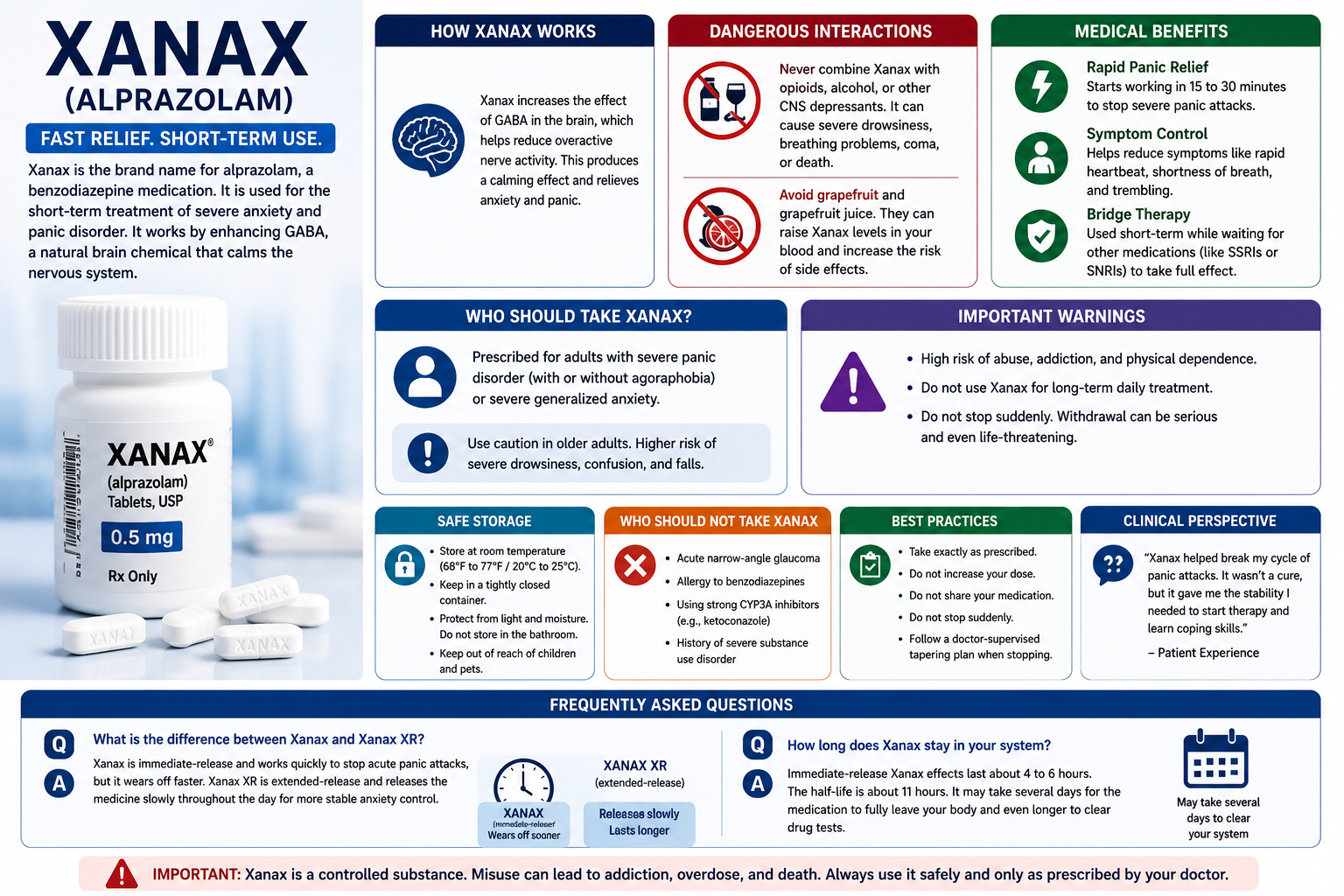
Xanax is the most common brand name for alprazolam, a prescription medication from the benzodiazepine family. It is mainly used to treat severe anxiety and panic disorders. Xanax works by increasing the effects of GABA, a natural chemical in the brain that helps calm the nervous system and reduce feelings of anxiety and panic.
How to Take Xanax
Xanax should only be taken as prescribed by your healthcare provider.
It is available as:
Immediate-release tablets
Extended-release (XR) tablets
Because Xanax works quickly and can cause dependence, it is usually prescribed for short-term use. The dosage depends on your condition, symptoms, and medical history.
Important Interactions to Avoid
Serious Warning
Do not take Xanax with:
Opioid pain medications
Alcohol
Sleeping pills
Other medicines that slow down the nervous system
Mixing these substances can cause extreme drowsiness, breathing problems, coma, or even death.
You should also avoid grapefruit and grapefruit juice because they can increase Xanax levels in the body and raise the risk of side effects.
Benefits and Medical Uses
Fast Relief from Panic Attacks
Immediate-release Xanax usually starts working within 15 to 30 minutes, making it helpful for sudden panic attacks.
Reduces Anxiety Symptoms
It can help control symptoms such as:
Rapid heartbeat
Shortness of breath
Shaking or tremors
Intense fear and anxiety
Short-Term Support
Doctors may prescribe Xanax while waiting for antidepressants such as SSRIs or SNRIs to start working, since those medications can take several weeks to become effective.
Who May Be Prescribed Xanax?
Xanax is commonly prescribed for adults with:
Panic disorder
Generalized anxiety disorder (GAD)
Severe anxiety symptoms
Doctors use extra caution when prescribing Xanax to older adults because they may be more sensitive to its effects, increasing the risk of drowsiness, confusion, and falls.
FDA Warnings and Current Guidelines
The FDA has strengthened warnings about Xanax and other benzodiazepines due to the risks of:
Misuse
Addiction
Physical dependence
Withdrawal symptoms
Today, many healthcare providers recommend using Xanax mainly for short-term situations while focusing on therapy and other non-habit-forming treatments for long-term anxiety management.
Storage Instructions
Store Xanax at room temperature between 68°F and 77°F (20°C to 25°C).
Keep it:
In a tightly closed container
Away from heat, moisture, and direct sunlight
Out of bathrooms and humid areas
Because Xanax is a controlled substance, it should be stored in a secure place away from children and teenagers.
Who Should Not Take Xanax?
Xanax may not be suitable for people who have:
Acute narrow-angle glaucoma
An allergy to benzodiazepines
Use of strong CYP3A inhibitor medications such as ketoconazole
A history of severe substance abuse or addiction
Always discuss your medical history with your healthcare provider before taking Xanax.
Patient Experience
“Xanax helped stop my daily panic attacks, but my psychiatrist explained that it was only a short-term tool. It gave me enough relief to start Cognitive Behavioral Therapy and work on long-term recovery.”
Stopping Xanax Safely
Do not stop taking Xanax suddenly after regular use.
Stopping abruptly may cause serious withdrawal symptoms, including:
Increased anxiety or panic attacks
Hallucinations
Seizures
If Xanax needs to be discontinued, your doctor will usually create a gradual tapering plan to reduce the dose safely.
Frequently Asked Questions
What is the difference between Xanax and Xanax XR?
Regular Xanax is an immediate-release tablet that works quickly but wears off faster. Xanax XR is an extended-release version that slowly releases the medication throughout the day for more consistent symptom control.
How long does Xanax stay in your system?
The effects of regular Xanax usually last about 4 to 6 hours. However, the medication remains in the body much longer. Its average half-life is around 11 hours, and it may take several days for the drug and its metabolites to be fully removed from the body.