Understanding Xanax: Clinical Uses, Efficacy, and Safety Information

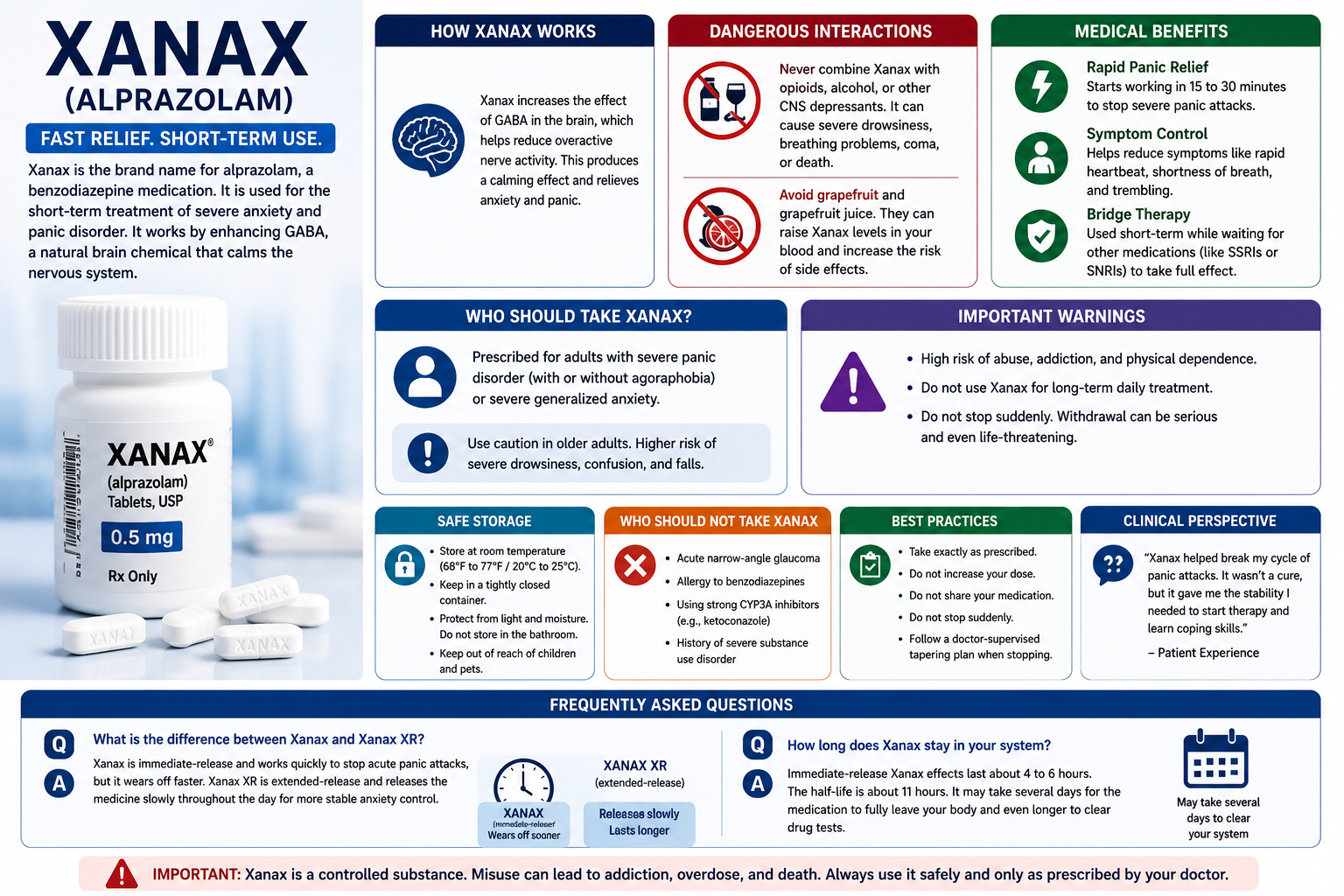
Xanax is the most common brand name for alprazolam, a prescription medication from the benzodiazepine family. It is mainly used to treat severe anxiety and panic disorders. Xanax works by increasing the effects of GABA, a natural chemical in the brain that helps calm the nervous system and reduce feelings of anxiety and panic.

How to Take Xanax

Xanax should only be taken as prescribed by your healthcare provider.

It is available as:

  • Immediate-release tablets

  • Extended-release (XR) tablets

Because Xanax works quickly and can cause dependence, it is usually prescribed for short-term use. The dosage depends on your condition, symptoms, and medical history.

Important Interactions to Avoid

Serious Warning

Do not take Xanax with:

  • Opioid pain medications

  • Alcohol

  • Sleeping pills

  • Other medicines that slow down the nervous system

Mixing these substances can cause extreme drowsiness, breathing problems, coma, or even death.

You should also avoid grapefruit and grapefruit juice because they can increase Xanax levels in the body and raise the risk of side effects.

Benefits and Medical Uses

Fast Relief from Panic Attacks

Immediate-release Xanax usually starts working within 15 to 30 minutes, making it helpful for sudden panic attacks.

Reduces Anxiety Symptoms

It can help control symptoms such as:

  • Rapid heartbeat

  • Shortness of breath

  • Shaking or tremors

  • Intense fear and anxiety

Short-Term Support

Doctors may prescribe Xanax while waiting for antidepressants such as SSRIs or SNRIs to start working, since those medications can take several weeks to become effective.

Who May Be Prescribed Xanax?

Xanax is commonly prescribed for adults with:

  • Panic disorder

  • Generalized anxiety disorder (GAD)

  • Severe anxiety symptoms

Doctors use extra caution when prescribing Xanax to older adults because they may be more sensitive to its effects, increasing the risk of drowsiness, confusion, and falls.

FDA Warnings and Current Guidelines

The FDA has strengthened warnings about Xanax and other benzodiazepines due to the risks of:

  • Misuse

  • Addiction

  • Physical dependence

  • Withdrawal symptoms

Today, many healthcare providers recommend using Xanax mainly for short-term situations while focusing on therapy and other non-habit-forming treatments for long-term anxiety management.

Storage Instructions

Store Xanax at room temperature between 68°F and 77°F (20°C to 25°C).

Keep it:

  • In a tightly closed container

  • Away from heat, moisture, and direct sunlight

  • Out of bathrooms and humid areas

Because Xanax is a controlled substance, it should be stored in a secure place away from children and teenagers.

Who Should Not Take Xanax?

Xanax may not be suitable for people who have:

  • Acute narrow-angle glaucoma

  • An allergy to benzodiazepines

  • Use of strong CYP3A inhibitor medications such as ketoconazole

  • A history of severe substance abuse or addiction

Always discuss your medical history with your healthcare provider before taking Xanax.

Patient Experience

“Xanax helped stop my daily panic attacks, but my psychiatrist explained that it was only a short-term tool. It gave me enough relief to start Cognitive Behavioral Therapy and work on long-term recovery.”

Stopping Xanax Safely

Do not stop taking Xanax suddenly after regular use.

Stopping abruptly may cause serious withdrawal symptoms, including:

  • Increased anxiety or panic attacks

  • Hallucinations

  • Seizures

If Xanax needs to be discontinued, your doctor will usually create a gradual tapering plan to reduce the dose safely.

Frequently Asked Questions

What is the difference between Xanax and Xanax XR?

Regular Xanax is an immediate-release tablet that works quickly but wears off faster. Xanax XR is an extended-release version that slowly releases the medication throughout the day for more consistent symptom control.

How long does Xanax stay in your system?

The effects of regular Xanax usually last about 4 to 6 hours. However, the medication remains in the body much longer. Its average half-life is around 11 hours, and it may take several days for the drug and its metabolites to be fully removed from the body.
Understanding Painkillers (Analgesics): Types, Uses, and Safety

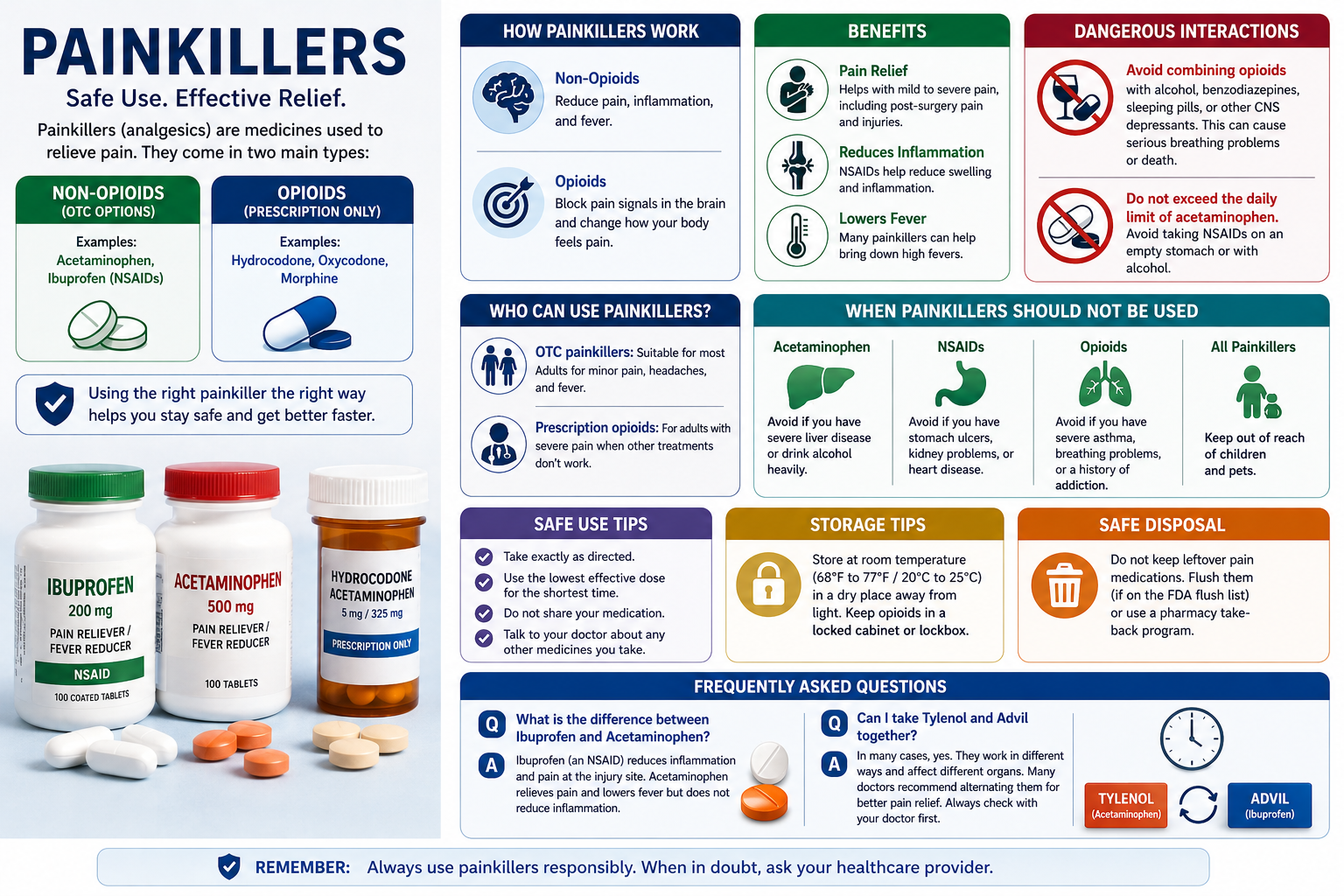
Painkillers, also called analgesics, are medicines used to relieve pain. Some are available over the counter (OTC), while others require a prescription. The main types are non-opioid painkillers, such as acetaminophen and NSAIDs (like ibuprofen), and opioid painkillers, such as hydrocodone, oxycodone, and morphine.

How Painkillers Are Used

The type of painkiller used depends on the severity of the pain.

  • OTC pain relievers should be used according to the instructions on the label.

  • Prescription pain medications should only be taken as directed by a healthcare provider.

Doctors generally recommend using the lowest effective dose for the shortest time needed.

Important Safety Precautions

Prescription Opioids

Do not mix opioid painkillers with:

  • Alcohol

  • Benzodiazepines

  • Sleeping medications

  • Other medicines that cause drowsiness

These combinations can lead to serious breathing problems and may be life-threatening.

OTC Painkillers

  • Do not exceed the recommended daily dose of acetaminophen, as it may cause severe liver damage.

  • Avoid taking NSAIDs with alcohol or on an empty stomach, as they may increase the risk of stomach ulcers and bleeding.

Benefits and Common Uses

Pain Relief

Prescription opioids may help manage severe pain after surgery, major injuries, or certain medical treatments.

Reducing Inflammation

NSAIDs such as ibuprofen and naproxen help reduce swelling and inflammation while relieving pain.

Fever Reduction

Many non-opioid painkillers, especially acetaminophen, can help lower fever.

Who Can Use Painkillers?

Most adults can use OTC pain relievers for headaches, minor aches, and fever if they do not have medical conditions that prevent their use.

Prescription opioids are usually reserved for severe pain when other treatments are not effective.

Current Medical Guidelines

Because of the ongoing opioid crisis, healthcare providers now focus on using non-opioid treatments whenever possible. This may include:

  • OTC medications

  • Physical therapy

  • Exercise and rehabilitation programs

  • Other pain management treatments

Opioids are carefully monitored and are generally not recommended for long-term pain management due to the risk of addiction and dependence.

Storage Instructions

Store painkillers at room temperature between 68°F and 77°F (20°C to 25°C) in a cool, dry place away from direct sunlight.

Prescription opioids should always be kept in a secure, locked location to prevent misuse, theft, or accidental use by children or pets.

When Painkillers Should Not Be Used

Acetaminophen

Avoid if you have:

  • Severe liver disease

  • Heavy alcohol use

NSAIDs

Avoid if you have:

  • A history of stomach ulcers

  • Severe kidney disease

  • Certain heart or cardiovascular conditions

Opioids

Avoid if you have:

  • Severe asthma or breathing problems

  • A history of substance abuse

  • Paralytic ileus or bowel obstruction

Safe Use and Disposal

If you have been prescribed opioids, speak with your doctor about reducing and stopping them as soon as your pain improves.

Never keep unused prescription pain medications for future use. Dispose of them through approved medication take-back programs or pharmacy drop-off locations whenever possible.

Frequently Asked Questions

What is the difference between Ibuprofen and Acetaminophen?

Ibuprofen is an NSAID that helps reduce inflammation and swelling. Acetaminophen helps relieve pain and reduce fever but does not reduce inflammation.

Can I take Tylenol and Advil together?

In many cases, yes. Acetaminophen (Tylenol) and ibuprofen (Advil) work differently and are processed by different parts of the body. Some healthcare providers recommend alternating them for better pain control. Always consult your doctor before combining medications.

Understanding Citra Tramadol: Medical Uses, Mechanisms, and Safety

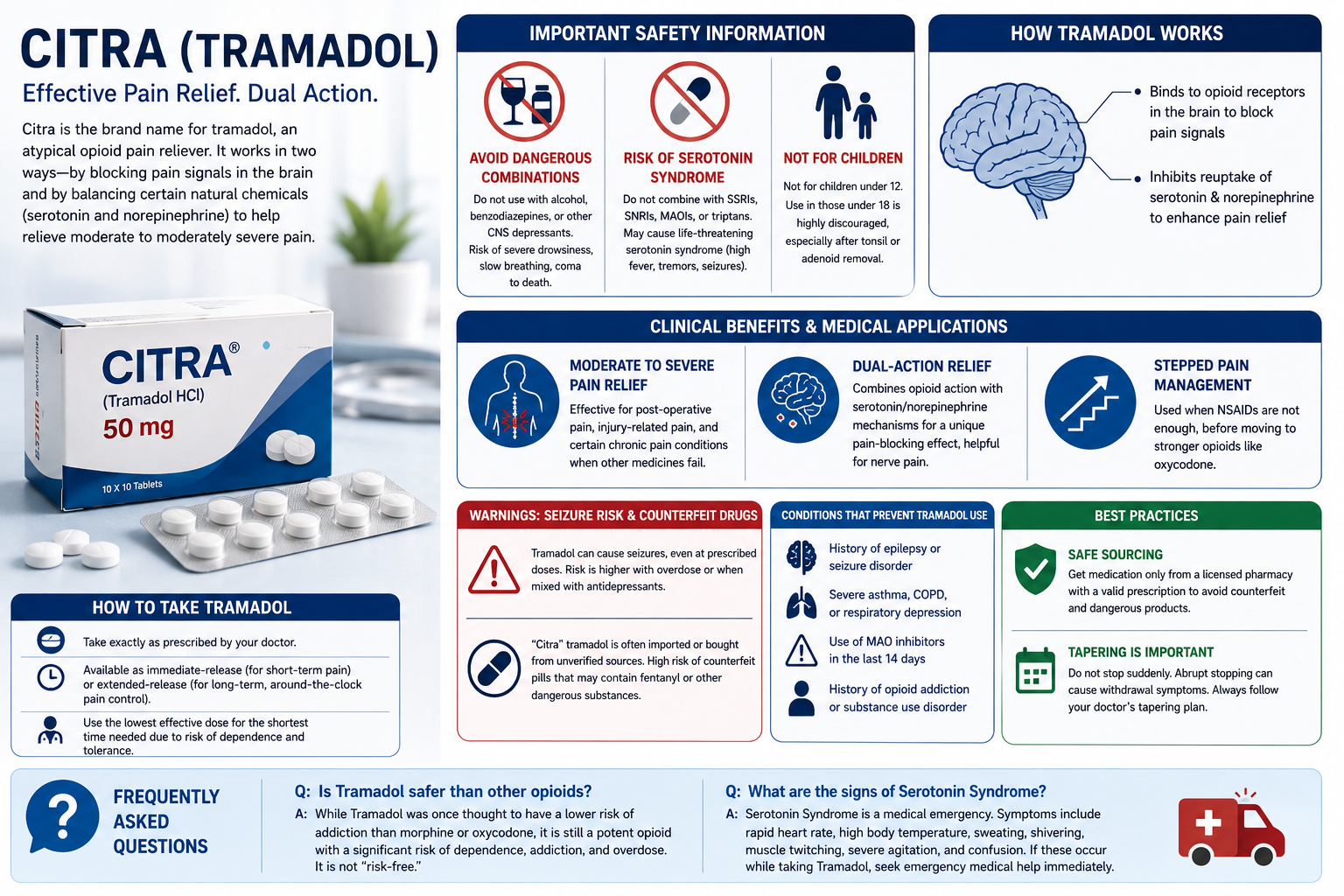
Citra is a brand name of Tramadol, a prescription pain-relief medication. It is used to treat moderate to moderately severe pain. Tramadol works in two ways: it blocks pain signals in the brain and also affects serotonin and norepinephrine, two chemicals that help regulate pain.

How to Take Tramadol

Always take Tramadol exactly as prescribed by your doctor. It is available as immediate-release tablets for short-term pain and extended-release tablets for long-term pain management.

Because Tramadol can cause dependence, it should be taken at the lowest effective dose and for the shortest time needed.

Important Drug Interactions

Do not take Tramadol with:

  • Alcohol

  • Benzodiazepines

  • Sleeping pills

  • Other medications that slow the nervous system

Combining these substances can cause serious breathing problems and may increase the risk of overdose.

Tramadol also affects serotonin levels. Taking it together with SSRIs, SNRIs, MAOIs, or certain migraine medicines may cause Serotonin Syndrome, a serious medical condition that can lead to fever, tremors, seizures, and other severe symptoms.

Benefits and Uses

Tramadol may be used for:

  • Moderate to severe pain

  • Pain after surgery

  • Injury-related pain

  • Certain long-term pain conditions

  • Some types of nerve pain

It is often prescribed when over-the-counter pain medicines are not providing enough relief.

Who Can Use Tramadol?

Tramadol is generally prescribed for adults with moderate to severe acute or chronic pain.

It should not be used by children under 12 years old and is generally not recommended for anyone under 18 years old, especially after tonsil or adenoid surgery due to serious breathing risks.

Important Warnings

Tramadol may increase the risk of seizures, even at prescribed doses. The risk is higher during an overdose or when combined with antidepressants.

Health experts also warn against buying Tramadol from unlicensed sources, as counterfeit products may contain dangerous substances such as fentanyl.

When Tramadol Should Not Be Used

Do not use Tramadol if you have:

  • Epilepsy or seizure disorders

  • Severe asthma or breathing problems

  • Recently used an MAOI medication (within the last 14 days)

  • A history of opioid addiction or substance abuse

Safe Use Guidelines

Only purchase Tramadol from a licensed pharmacy with a valid prescription.

If you have been taking Tramadol for a long period, do not stop suddenly. Stopping abruptly may cause withdrawal symptoms. Always follow your doctor’s instructions when reducing or stopping treatment.

Frequently Asked Questions

Is Tramadol safer than other opioids?

Tramadol may have a lower addiction risk than some stronger opioids, but it can still cause dependence, addiction, overdose, and serious side effects. It should always be used carefully.

What are the symptoms of Serotonin Syndrome?

Symptoms may include:

  • Fast heartbeat

  • High fever

  • Excessive sweating

  • Shivering

  • Muscle twitching

  • Severe agitation

  • Confusion

If you experience these symptoms while taking Tramadol, seek emergency medical attention immediately.

Understanding Codeine: Medical Uses, Efficacy, and Safety Information

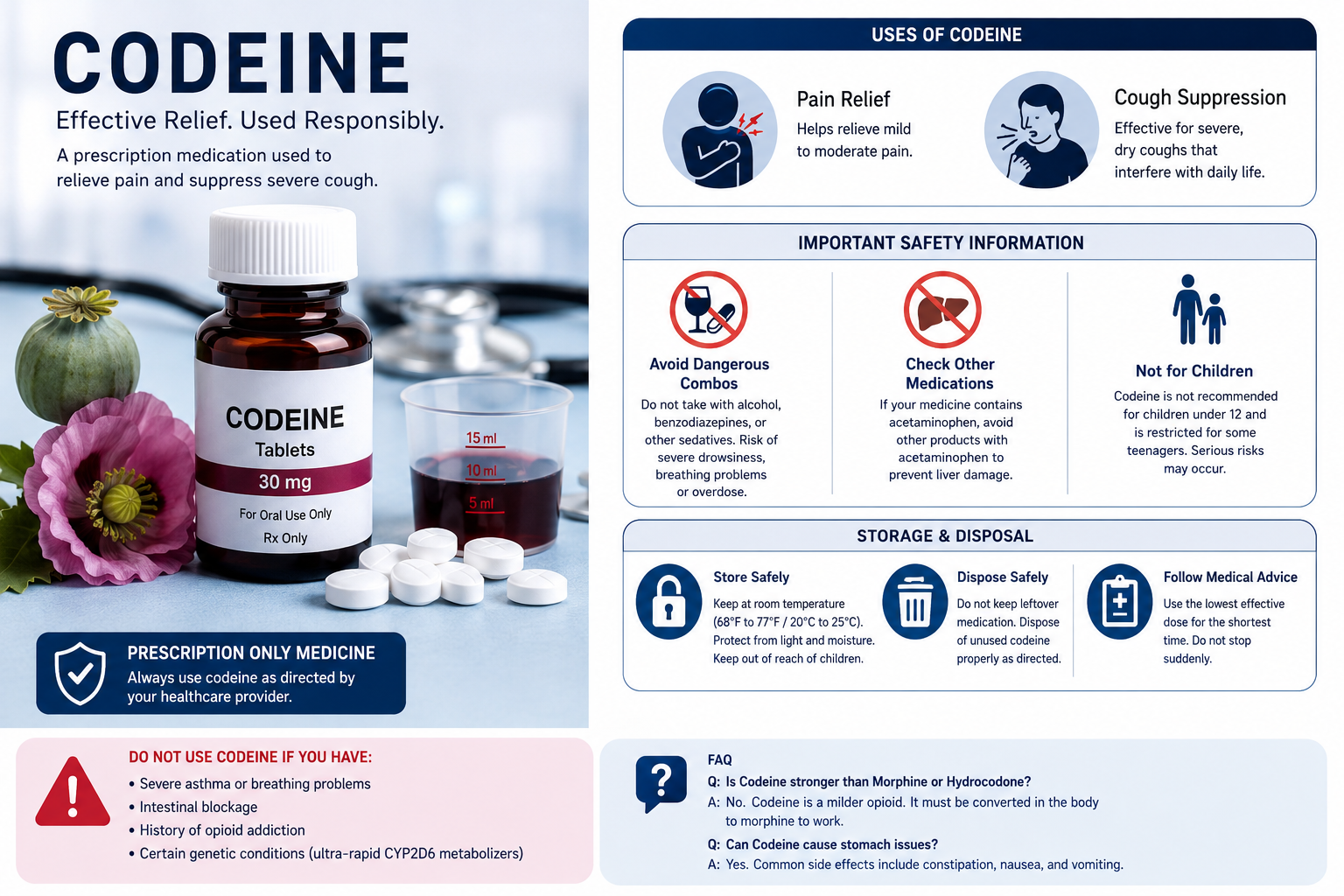
Codeine is a prescription opioid medication used to treat mild to moderate pain and severe coughs. It works by affecting the brain and nervous system to reduce pain and suppress coughing.

How to Use Codeine

Codeine should only be taken as prescribed by a healthcare provider. It is available as tablets, syrups, and combination medicines. Always follow the prescribed dosage and use a proper measuring device for liquid forms.

Important Safety Information

Do not take codeine with alcohol, sleeping pills, benzodiazepines, or other medicines that cause drowsiness, as this can lead to serious breathing problems or overdose.

If your codeine product contains acetaminophen, avoid taking other medicines that also contain acetaminophen to reduce the risk of liver damage.

Uses of Codeine

  • Relief of mild to moderate pain

  • Treatment of severe dry coughs

  • Enhanced pain relief when combined with other medications

Who Can Use Codeine?

Codeine may be prescribed for adults with certain pain conditions or severe coughs. It is not recommended for young children and should only be used under medical supervision.

FDA Warnings

Codeine should not be used in children under 12 years of age and is restricted for some teenagers due to the risk of serious breathing problems and other side effects.

Storage Instructions

Store codeine at room temperature between 68°F and 77°F (20°C–25°C). Keep it away from heat, moisture, and direct sunlight. Store it in a secure place out of the reach of children.

When Codeine Should Not Be Used

Avoid codeine if you have:

  • Severe asthma or serious breathing problems

  • Intestinal blockage

  • A history of opioid misuse or addiction

  • Medical conditions that make codeine unsafe as advised by your doctor

Safe Use and Disposal

Long-term use of codeine can lead to dependence. Do not stop using it suddenly without medical advice. Dispose of unused medication safely through approved take-back programs or as directed by local regulations.

Frequently Asked Questions

Q: Is Codeine stronger than Morphine or Hydrocodone?

A: No. Codeine is generally considered a milder opioid than morphine or hydrocodone.

Q: Can Codeine cause stomach problems?

A: Yes. Common side effects include constipation, nausea, and vomiting, especially when starting treatment.

Add to cart