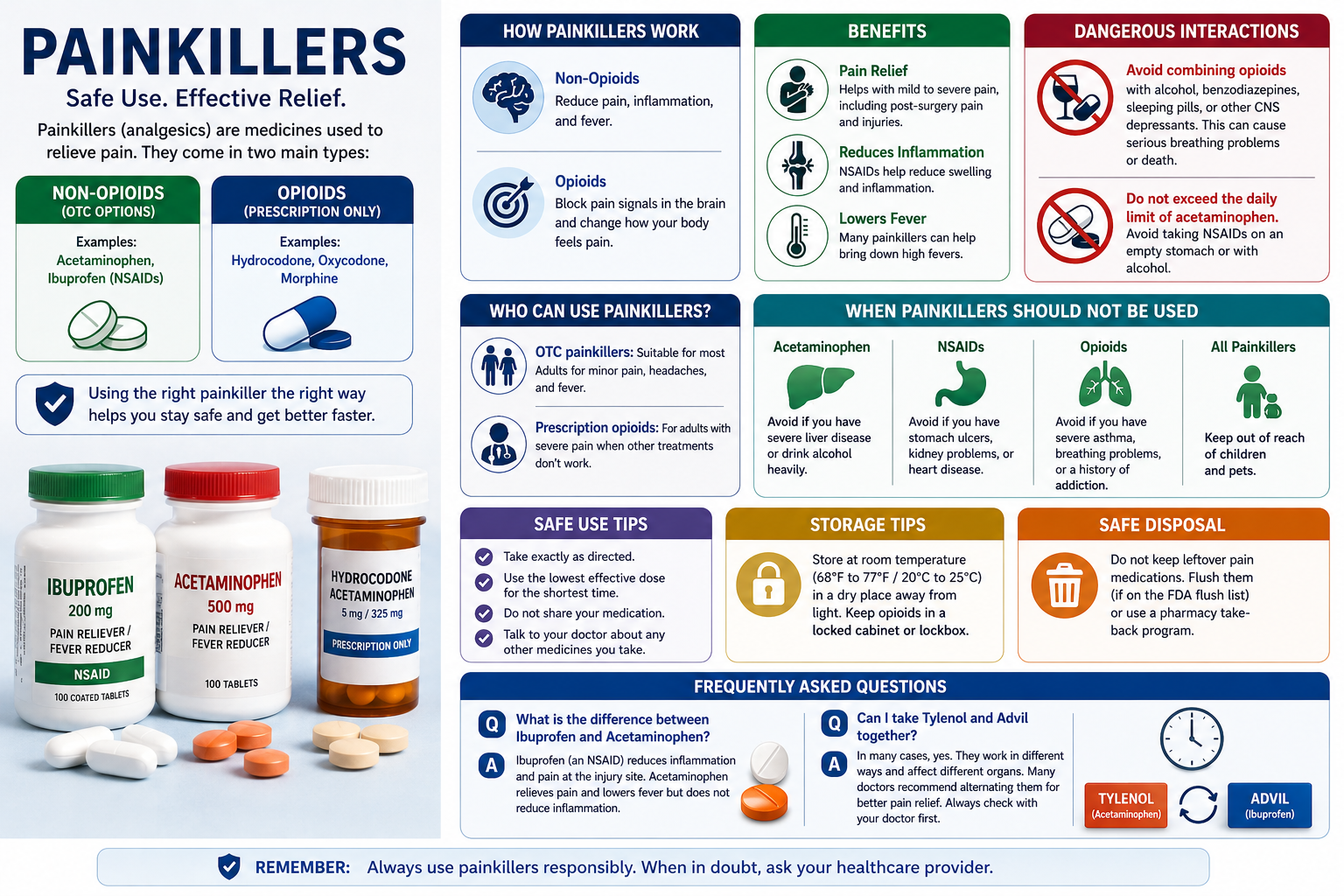
Painkillers, also called analgesics, are medicines used to relieve pain. Some are available over the counter (OTC), while others require a prescription. The main types are non-opioid painkillers, such as acetaminophen and NSAIDs (like ibuprofen), and opioid painkillers, such as hydrocodone, oxycodone, and morphine.
How Painkillers Are Used
The type of painkiller used depends on the severity of the pain.
OTC pain relievers should be used according to the instructions on the label.
Prescription pain medications should only be taken as directed by a healthcare provider.
Doctors generally recommend using the lowest effective dose for the shortest time needed.
Important Safety Precautions
Prescription Opioids
Do not mix opioid painkillers with:
Alcohol
Benzodiazepines
Sleeping medications
Other medicines that cause drowsiness
These combinations can lead to serious breathing problems and may be life-threatening.
OTC Painkillers
Do not exceed the recommended daily dose of acetaminophen, as it may cause severe liver damage.
Avoid taking NSAIDs with alcohol or on an empty stomach, as they may increase the risk of stomach ulcers and bleeding.
Benefits and Common Uses
Pain Relief
Prescription opioids may help manage severe pain after surgery, major injuries, or certain medical treatments.
Reducing Inflammation
NSAIDs such as ibuprofen and naproxen help reduce swelling and inflammation while relieving pain.
Fever Reduction
Many non-opioid painkillers, especially acetaminophen, can help lower fever.
Who Can Use Painkillers?
Most adults can use OTC pain relievers for headaches, minor aches, and fever if they do not have medical conditions that prevent their use.
Prescription opioids are usually reserved for severe pain when other treatments are not effective.
Current Medical Guidelines
Because of the ongoing opioid crisis, healthcare providers now focus on using non-opioid treatments whenever possible. This may include:
OTC medications
Physical therapy
Exercise and rehabilitation programs
Other pain management treatments
Opioids are carefully monitored and are generally not recommended for long-term pain management due to the risk of addiction and dependence.
Storage Instructions
Store painkillers at room temperature between 68°F and 77°F (20°C to 25°C) in a cool, dry place away from direct sunlight.
Prescription opioids should always be kept in a secure, locked location to prevent misuse, theft, or accidental use by children or pets.
When Painkillers Should Not Be Used
Acetaminophen
Avoid if you have:
Severe liver disease
Heavy alcohol use
NSAIDs
Avoid if you have:
A history of stomach ulcers
Severe kidney disease
Certain heart or cardiovascular conditions
Opioids
Avoid if you have:
Severe asthma or breathing problems
A history of substance abuse
Paralytic ileus or bowel obstruction
Safe Use and Disposal
If you have been prescribed opioids, speak with your doctor about reducing and stopping them as soon as your pain improves.
Never keep unused prescription pain medications for future use. Dispose of them through approved medication take-back programs or pharmacy drop-off locations whenever possible.
Frequently Asked Questions
What is the difference between Ibuprofen and Acetaminophen?
Ibuprofen is an NSAID that helps reduce inflammation and swelling. Acetaminophen helps relieve pain and reduce fever but does not reduce inflammation.
Can I take Tylenol and Advil together?
In many cases, yes. Acetaminophen (Tylenol) and ibuprofen (Advil) work differently and are processed by different parts of the body. Some healthcare providers recommend alternating them for better pain control. Always consult your doctor before combining medications.