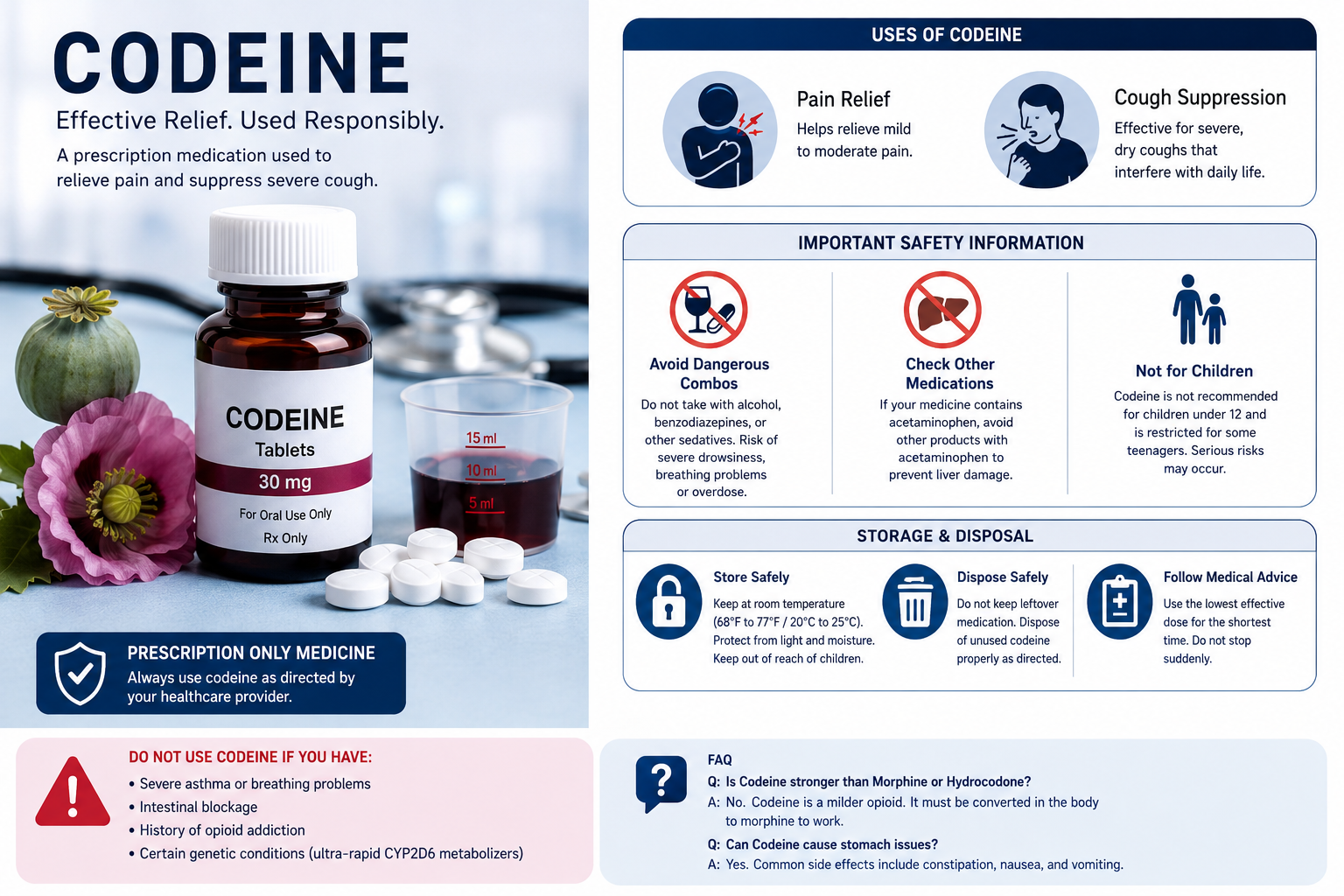
Codeine is a prescription opioid medication used to treat mild to moderate pain and severe coughs. It works by affecting the brain and nervous system to reduce pain and suppress coughing.
How to Use Codeine
Codeine should only be taken as prescribed by a healthcare provider. It is available as tablets, syrups, and combination medicines. Always follow the prescribed dosage and use a proper measuring device for liquid forms.
Important Safety Information
Do not take codeine with alcohol, sleeping pills, benzodiazepines, or other medicines that cause drowsiness, as this can lead to serious breathing problems or overdose.
If your codeine product contains acetaminophen, avoid taking other medicines that also contain acetaminophen to reduce the risk of liver damage.
Uses of Codeine
Relief of mild to moderate pain
Treatment of severe dry coughs
Enhanced pain relief when combined with other medications
Who Can Use Codeine?
Codeine may be prescribed for adults with certain pain conditions or severe coughs. It is not recommended for young children and should only be used under medical supervision.
FDA Warnings
Codeine should not be used in children under 12 years of age and is restricted for some teenagers due to the risk of serious breathing problems and other side effects.
Storage Instructions
Store codeine at room temperature between 68°F and 77°F (20°C–25°C). Keep it away from heat, moisture, and direct sunlight. Store it in a secure place out of the reach of children.
When Codeine Should Not Be Used
Avoid codeine if you have:
Severe asthma or serious breathing problems
Intestinal blockage
A history of opioid misuse or addiction
Medical conditions that make codeine unsafe as advised by your doctor
Safe Use and Disposal
Long-term use of codeine can lead to dependence. Do not stop using it suddenly without medical advice. Dispose of unused medication safely through approved take-back programs or as directed by local regulations.
Frequently Asked Questions
Q: Is Codeine stronger than Morphine or Hydrocodone?
A: No. Codeine is generally considered a milder opioid than morphine or hydrocodone.
Q: Can Codeine cause stomach problems?
A: Yes. Common side effects include constipation, nausea, and vomiting, especially when starting treatment.